There’s a moment on every Pure Trek tour, usually right before the first rappel, when you’re standing at the edge of a waterfall with a rope in your gloved hands and a guide smiling at you like this is the most normal thing in the world. Your brain says absolutely not. The guide says you’ve got this. A few seconds later, you’re walking backwards down a curtain of falling water, grinning like a maniac, wondering why you ever hesitated.
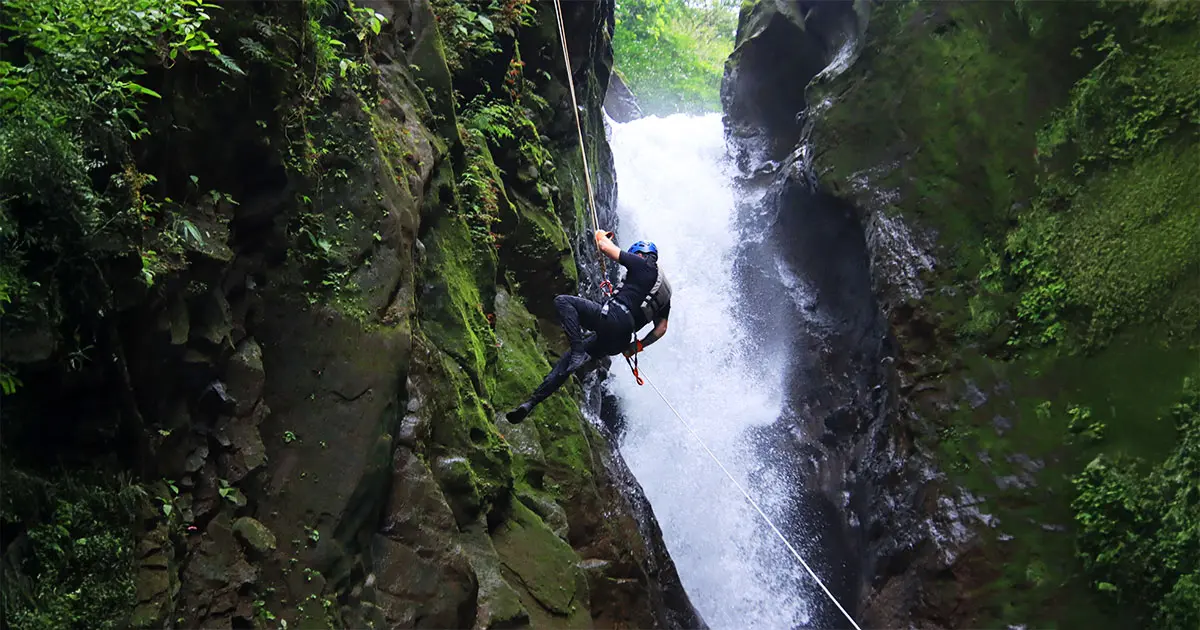
That’s canyoning in La Fortuna. And for a lot of travelers, it ends up being the single best day of their Costa Rica trip.
La Fortuna, the small town sitting at the foot of the Arenal Volcano, is the country’s unofficial adventure capital. Zip lines, hanging bridges, hot springs, white water rafting, you name it. But one of the longest-running and most-loved adventures in town is Pure Trek Canyoning, a company that has been lowering people down tropical waterfalls since 2001 and basically invented the activity as a tourist experience in Costa Rica.
Wait, What Is Canyoning?
Canyoning (or canyoneering, as it’s called in the US) is the sport of traveling down through a canyon using whatever the terrain demands: hiking, rappelling, climbing, jumping, sliding, sometimes swimming. The word “canyoneering” is thought to go back to John Wesley Powell’s expedition down the Colorado River in 1869, and versions of the sport popped up independently all over the world through the 1900s.
Traditionally, it was a fairly extreme pursuit reserved for climbers and mountaineers. What makes Pure Trek interesting is that they took that extreme sport and turned it into something a five-year-old and an eighty-year-old can do on the same morning.
The Pure Trek Story
Pure Trek was founded in 2001 by Cynthia Crummer, who arrived in Costa Rica from San Francisco with a passion for canyoneering and a slightly wild idea: bring regular people, not just hardcore athletes, into a rainforest canyon beneath the Arenal Volcano. That made Pure Trek the pioneer of waterfall rappelling in Costa Rica, and more than two decades later they’re still the most popular canyoning operator in La Fortuna.
A few things stand out about how they run the place. All of their guides are bilingual, professionally trained, and certified in canyoning by Costa Rica’s National Academy for Guides (INA). Their headquarters is a “Treehouse Base Camp” just outside town, set in tropical gardens full of native birds and, charmingly, a few rescued cats. And a percentage of company profits goes back into local community projects, which is the kind of detail that makes you feel good about where your money’s going.
What the Tour Actually Looks Like
The whole experience is a half-day affair, roughly four hours door to door. Here’s the flow.
It starts with pickup from your hotel or vacation rental anywhere in La Fortuna, which is included in the tour. (If you’re coming from San Jose, they can arrange that too for an extra charge.) One small quirk worth knowing: guests can’t drive their own cars to the canyon, and there’s no discount for meeting at the office, so just take the ride.
At base camp, you’ll get geared up with a helmet, harness and gloves, all proper canyoneering and rock climbing equipment. Then comes the safety talk. The guides walk you through how to hold the rope, how to position your body, what to do with your feet. Pay attention here, but don’t stress: no previous experience is required, and this briefing genuinely prepares you.
Then you head into the canyon. The tour includes four rappels in total, three down waterfalls and one down a rock wall, with hiking on well-maintained trails between each descent. The guide setup is reassuring: there’s always one guide at the top of the line and another at the bottom, so you’re supported from both ends the entire way down. At no point are you free-falling or jumping unassisted.
In between rappels, keep your eyes open. The canyon is proper rainforest, and toucans, sloths and monkeys all make appearances.
The signature moment, though, is the Monkey Drop. You clip into a zip line on the canyon wall, ride out over a pool, and then get lowered the last stretch until you drop into the water with a splash. A guide at the bottom pulls you up so you’re standing in waist-deep water, laughing and slightly disbelieving. It’s the part everyone talks about at lunch. If heights-plus-water sounds like too much, you can skip it and stick to the rappels, no judgment.
The most physically demanding part of the whole tour, somewhat surprisingly, is the end: a leisurely uphill hike of about 800 meters back out of the canyon. Take it slow. Nobody’s timing you.
Back at base camp, you’ll find towels, showers, changing rooms and lockers waiting. Then it’s time for lunch at the rancho: a garden-fresh, typical Costa Rican meal with vegetarian, vegan and gluten-free options (give them a heads-up about dietary restrictions when you book). Morning tours usually canyon first and eat after; afternoon tours flip the order. A photographer follows the group through the canyon, and you can look through and buy your photos after the tour. Bring a card or some cash.
Who Can Actually Do This?
More people than you’d think. The minimum age for the classic canyoning tour is five years old, and Pure Trek has welcomed guests as old as eighty into the canyon. Kids get their own specially sized harnesses, helmets and gloves, and for children, older adults, or anyone with a physical disability, the guides use a special lowering technique where they control the descent completely. The guides are specifically trained to work with kids, and the trails have railings. If your child gets nervous at the top of a drop, the guides are famously patient about it.
As for fitness, “moderate” is the honest word. Rappelling takes some strength but not much, and you’ll want to be able to walk that uphill trail at the end. The tour is not suitable for pregnant travelers or anyone with serious heart, back or joint problems, and there’s a weight limit of around 280 pounds plus a harness-fit requirement, so check with them directly when booking if any of that applies to your group.
And about the weather: the tour runs rain or shine. You’re going to get soaked anyway, remember. On rainy days they hand out waterproof jackets, and if conditions ever become genuinely unsafe, they cancel and refund or reschedule.
What to Wear and Bring
Keep it simple:
-
Quick-dry clothing (a swim shirt and board shorts work great; skip jeans or anything heavy)
-
Secure shoes you don’t mind soaking: running shoes, hiking boots, or strapped adventure sandals like Tevas, Keens or Chacos. No flip-flops or loose slip-ons, and note they don’t rent shoes
-
A swimsuit underneath
-
A full change of dry clothes for afterward
-
A GoPro or similar action camera if you have one
-
If you wear glasses, use a strap or switch to contacts
Towels are provided, so that’s one less thing to pack.
Making a Full Day of It
If a half-day isn’t enough adrenaline, Pure Trek pairs canyoning with other Arenal classics in all-day combo packages: white water rafting, zip lining, hanging bridges, hot springs, even stand-up pedal boarding on the lake. You can also book the canyon as a private tour if you’d rather keep the experience to your own group.
Worth a mention for the truly adventurous: in 2024 the company launched Rainforest Falls, a newer, more intense waterfall adventure with rappels, jumps and river exploration. The minimum age there is eight, and it’s aimed at people who tried classic canyoning and immediately wanted more.
So, Is It Worth It?
If you only have room for one or two paid tours in La Fortuna, this deserves a spot near the top of the list. It’s a genuinely unique way to experience the rainforest (from inside a canyon, next to waterfalls, rather than on a trail looking at it), the operation runs like a Swiss watch, and the guides somehow make first-timers and nervous kids feel like seasoned rappelers by the second waterfall.
You will get wet. You will probably scream a little on the Monkey Drop. And you’ll walk away with muddy shoes, a full stomach, and one of those travel stories you end up telling for years.
FAQs
Do I need any rappelling experience to do the Pure Trek tour?
None at all. Most people on the tour are complete beginners. The guides give you a full safety briefing before you enter the canyon, and there’s a guide positioned at both the top and bottom of every rappel to help you the entire way down.
Do I need to know how to swim?
No. There’s no swimming involved in the tour. The only part where you’re fully in the water is the optional Monkey Drop, and even there you land in a shallow pool where a guide immediately helps you stand up in waist-deep water.
What’s the minimum age? Is there a maximum?
Kids as young as five can join the classic canyoning tour (eight for Rainforest Falls), and Pure Trek has welcomed guests up to around eighty years old. Children and anyone who can’t rappel under their own power are lowered down each waterfall by the guides using a controlled technique, so strength and skill aren’t barriers.
What should I wear and bring?
Quick-dry clothes, a swimsuit, and secure closed-toe shoes or strapped adventure sandals that can get soaked. Bring a full change of clothes for after the tour and an action camera if you have one. Leave the flip-flops at the hotel. Towels, helmets, harnesses and gloves are all provided.
What happens if it rains on the day of my tour?
The tour runs rain or shine, and honestly, you’re going to be dripping wet either way, so a little rain barely matters. Pure Trek provides waterproof jackets on rainy days. The only exception is genuinely dangerous weather, in which case they’ll cancel and offer you a full refund or a new date.
