Most decisions about site, sustainability, and budget hinge on selecting an experienced architecture firm; this article highlights 10 top Costa Rican studios with proven expertise in tropical, sustainable and site-specific design to guide your construction from concept through completion. Use it to help you match your project’s scale, materials and timeline to firms with local knowledge, regulatory familiarity and a track record of delivering resilient, high-quality builds.
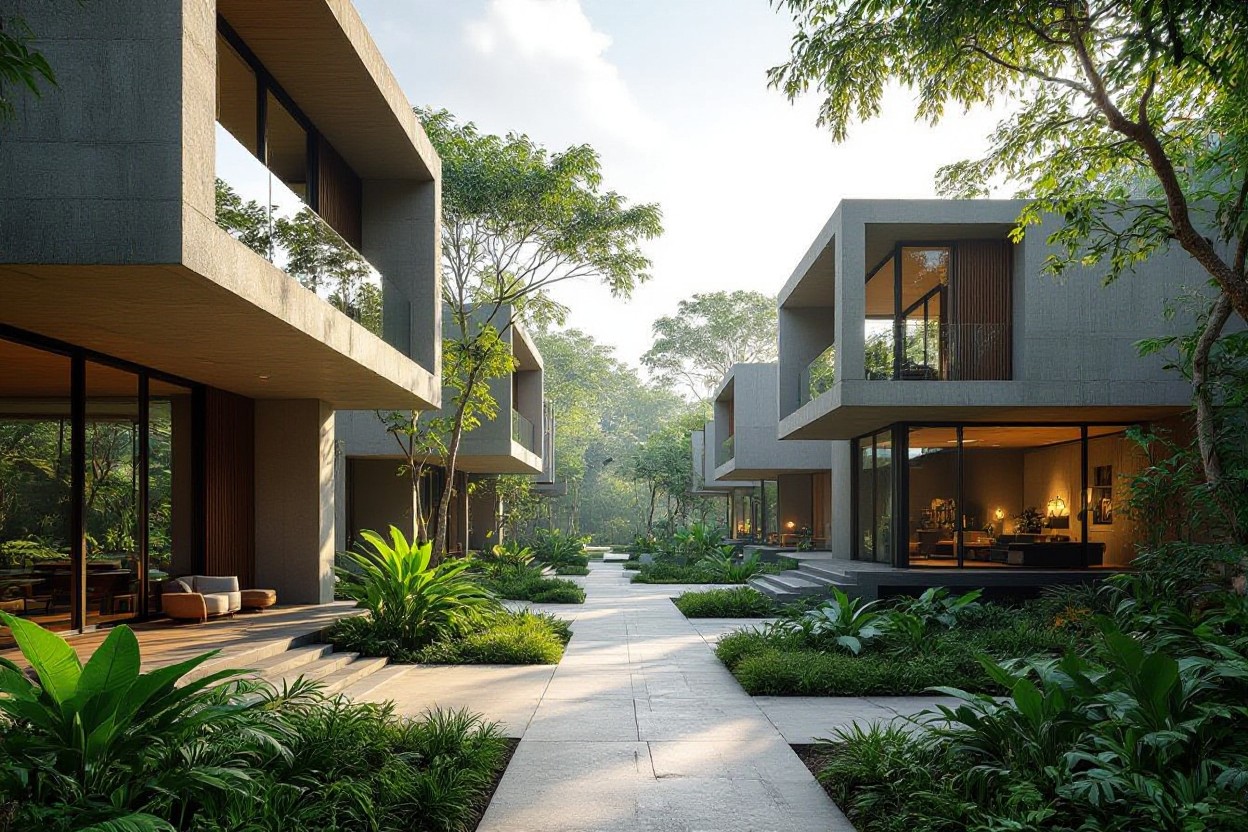
1- Zalez Architecture
Unique Design Philosophy
You’ll find Zalez’s “architecture with soul” blends handcrafted details with modern technology, prioritizing site-specific responses, local materials, and passive strategies. Zalez Architecture‘s process translates your program into plans that minimize footprint, integrate rainwater-harvesting provisions and solar-ready roofs, and balance aesthetics with budgets through transparent cost estimates from schematic design onward.
Signature Project Highlights
You’ll see projects spanning custom homes, boutique hotels, and commercial fit-outs; their typical delivery uses a three-phase workflow-concept, technical documentation, and construction supervision-so your project stays coordinated. They routinely produce construction drawings, specifications, and fortnightly site reports to maintain timeline milestones and cost checkpoints that keep budgets aligned.
A standout case: Casa AD, a 10,495 sq ft residence in Faro Escondido that reduced cooling loads via cross-ventilation and shading devices. You’ll notice open terraces overlooking Costa Rica’s central pacific ocean with amazing panoramic views, infinity view swimming pool, modern luxurious and spacious design; Zalez managed permitting, contractor coordination, and post-occupancy tuning.
2- Salvaje Studio
Salvaje Studio translates your desire for individuality into tropical architecture by prioritizing open-air living, natural materials and sculptural forms that respond to site microclimates. You’ll notice projects that blur indoor/outdoor boundaries with roofed terraces, operable screens and planted courtyards; their portfolio emphasizes tailored residential villas and boutique interiors that pair passive cooling strategies with handcrafted finishes to reflect each client’s personality.
Sustainable Architecture Practices
Salvaje embeds sustainability into your project through passive design-cross-ventilation, deep overhangs and night purging-combined with rainwater harvesting, rooftop solar readiness and locally sourced materials to lower embodied carbon. You can expect compact footprints and water cisterns sized to supply most domestic needs, plus design details that reduce reliance on mechanical cooling and align with Costa Rica’s common bioclimatic strategies.
Integrating Local Aesthetics
Salvaje integrates Costa Rican craft and vernacular cues so your home feels rooted: timber joinery, woven palm shading, stone base plinths and color palettes drawn from the landscape. You’ll work with the studio to incorporate artisan-made doors, built-in furniture and textured finishes that echo regional traditions while maintaining contemporary proportions and durability for a humid tropical climate.
Digging deeper, Salvaje often reinterprets traditional elements-such as the shaded corredor and pitched tile roofs-into modern components like cantilevered verandas and louvered facades that enhance daylight control and airflow. Your project can include staged material transitions (stone at ground, timber at living areas, lightweight screens at bedrooms) and collaborations with local carpenters to ensure finishes both authentic and resilient.
3- CRN Architecture
Operating since 2015, CRN Architecture guides clients through design, consulting and construction across Santa Teresa, Nosara, Tamarindo and Guanacaste. You’ll notice their emphasis on minimizing footprint and integrating passive strategies-natural ventilation, rainwater harvesting and solar-ready roofs-so your seaside villa or commercial fit-out performs well in Costa Rica’s tropical climate. Their team combines local construction know-how with hands-on client guidance from concept through completion.
Architectural Trends and Innovations
CRN applies contemporary tropical strategies you can see on-site: deep overhangs and cross-ventilation to cut cooling loads, locally sourced finishes to shorten supply chains, and modular detailing to speed construction in remote coastal sites. Because they deliver architecture plus construction services, you get coordinated detailing that prioritizes durability against salt air and humidity while keeping maintenance and lifecycle costs down.
Noteworthy Commissions and Projects
The studio’s portfolio focuses on residential, commercial and hospitality work-small boutique hotels, beachfront villas and mixed-use buildings-spread across Santa Teresa, Nosara, Tamarindo and the Guanacaste coast. If you’re commissioning a vacation rental or a hospitality conversion, CRN’s local experience positions them to manage coastal site constraints, client expectations and contractor logistics in tandem.
More specifically, CRN typically takes projects from feasibility and schematic design through permitting and on-site construction management, so you won’t need separate consultants for build coordination. Their approach streamlines approvals in district municipalities and consolidates contractor oversight, which helps keep timelines and budgets tighter when you’re developing in Costa Rica’s varied coastal jurisdictions.
4- Aarcano Arquitectura
Blending Tradition with Modernity
Co-founded by Esteban Castro and Carla Carranza, AARCANO translates colonial proportions and vernacular rooflines into contemporary volumes so your build feels rooted yet modern. They pair timber, stone and local finishes with passive strategies-cross-ventilation, deep overhangs and daylighting-to lower mechanical loads while preserving familiar spatial sequences that resonate with Costa Rican heritage.
Community-Centric Projects
When you commission AARCANO, expect designs framed as civic assets: small plazas, shaded gathering pavilions and adaptable housing that reinforce local routines and social ties. Their research-driven approach surfaces everyday practices so your project enhances public life, prioritizing permeability, public shade and informal meeting points that invite daily use.
AARCANO operationalizes community focus through staged engagement: site ethnographies, participatory charrettes and material prototyping that let you see and test solutions before construction. They work with local artisans to specify durable, low-maintenance materials suited to tropical humidity and integrate simple systems-rainwater capture, cross-ventilation paths and passive shading-so your completed project delivers measurable comfort and social activation while minimizing ongoing maintenance demands.
5- StudioDelRio
You’ll find StudioDelRio blending sculptural form and everyday utility so your spaces feel both poetic and practical; their projects average 280 m², commonly integrate 60-75% locally sourced materials, and prioritize passive cooling, rainwater capture and solar arrays to cut operational costs by roughly 20-30% compared with regional baselines.
Notable Techniques and Materials
You can expect layered strategies: cross-ventilation geometries, high thermal-mass volcanic stone, engineered timber frames and perforated concrete screens. Their typical assemblies deliver 15-25% lower cooling loads, use 60% reclaimed or local hardwood on finishings, and specify high-performance glazing with SHGC values under 0.35 for tropical comfort.
Case Studies on Innovative Builds
You’ll see concrete examples where form follows climate and budget: compact footprints on stilts, modular prefabrication to cut build time, and integrated PV-plus-battery systems sized to meet 40-80% of annual energy needs. Below are headline metrics from representative projects.
- Casa Loma (2022) – 320 m², budget $420,000, 18 kW PV, 45% energy reduction, 70% local material use, 6-month construction
- Coastal Retreat Nosara (2023) – 540 m², budget $1.2M, 95% rainwater capture meeting 60% of demand, A/C use cut by 65%, elevated 30% footprint reduction
- Volcanic Pavilion (2021) – 150 m² community center, budget $190,000, 120 m² CLT panels, prefabrication reduced labor cost by 40%, 4-month on-site assembly
You’ll notice these case studies emphasize replicable efficiencies: prefabrication trimmed on-site schedules by 30-50%, climatic design reduced mechanical loads substantially, and sourcing stone/wood locally cut material transport emissions and costs. If you’re planning a build, these examples show how targeted interventions affect budget, timeline and performance.
- Casa Loma – Structural: reinforced concrete + timber roof; Envelope U-value: 0.48 W/m²K; Solar: 18 kW PV + 10 kWh battery; Water: 12,000 L cistern; ROI on energy systems: ~8 years
- Coastal Retreat Nosara – Structural: steel piles + timber decks; Rainwater harvested: 150,000 L/year (95% capture efficiency); Mechanical hours saved: A/C runtime down 65%; Build time: 9 months; Local labor: 82%
- Volcanic Pavilion – Structural system: 120 m² CLT panels (40% faster erection); Material reuse: 35% reclaimed timber; Construction waste diversion: 78%; Community capacity: hosts 50 people, annual operating cost reduced 28% vs conventional benchmark
6- VOID
VOID, founded in 2012 by Sergio Frugone, Felipe Rossi and Ricardo Sevilla, pushes you to rethink program and place through multidisciplinary collaboration; over 13 years they prioritize projects-public and private-that intentionally affect their immediate context, pairing experimental form-making with practical sustainability measures like on-site water capture, passive cooling and local-material sourcing so your project reads as both contemporary gesture and responsible intervention.
Experimental Designs and Structures
You’ll notice VOID’s appetite for negative space and structural expression: double-height voids, cantilevered volumes, perforated façades and exposed concrete meet lightweight timber or steel prefabs in their work-often developed through parametric models and 1:20 mockups before full-scale prototypes-to test daylighting, cross-ventilation and constructability on steep coastal or forested parcels typical of Costa Rica.
Impact of Contextual Awareness
When you engage VOID, site analysis drives design decisions: orientation for prevailing breezes, shaded terraces, minimal access roads, and preservation of native vegetation all reduce footprint and improve microclimate performance, while stakeholder workshops ensure the building responds to local needs and visual character rather than imposing an abstract form.
Digging deeper, VOID translates context into technical choices you can measure: elevated slabs and narrow building envelopes limit soil disturbance, permeable paving and rainwater harvesting manage storm runoff, and integrated photovoltaics plus passive ventilation strategies commonly yield substantial reductions in mechanical loads; the studio also collaborates with local engineers and artisans to use bamboo, reclaimed wood and volcanic stone, tying performance targets to local labor and craft expertise so your project benefits the place economically and environmentally.
7- Carazo Arquitectura
Carazo Arquitectura, founded by Rodrigo Carazo in 2005 and based in San José, combines site-specific planning with Costa Rica’s sustainable traditions so your project performs as well as it looks. You get designs that minimize footprint, prioritize cross-ventilation and daylighting, and integrate rainwater harvesting and photovoltaic systems where appropriate. Their portfolio spans custom residences, small hospitality projects and urban infill, so whether you’re building in Guanacaste or Escazú they balance technical rigor, local materials and client priorities to deliver measurable environmental and comfort outcomes.
Integrated Design Strategies
They orient buildings to prevailing breezes and sun paths so you benefit from passive cooling and reduced mechanical loads; you’ll often see deep overhangs, operable louvers and clerestory windows paired with rainwater cisterns and roof-mounted solar arrays. Carazo specifies locally sourced timber and low-impact concrete mixes to cut embodied carbon, and coordinates structural, MEP and landscape teams early in design to limit rework and waste on site-an approach that shortens schedules and controls cost for your build.
Client Testimonials and Success Stories
Clients consistently highlight Carazo’s transparent budgets and hands-on supervision, saying their projects met schedules and lowered operating costs through targeted sustainability measures. You’ll hear specific praise for improved indoor comfort in tropical climates and for practical solutions-like integrated cistern systems and shaded terraces-that translated to higher rental income for several hospitality clients in coastal zones.
One notable client case involved a three-unit coastal guesthouse where Carazo reworked orientation, added passive ventilation and a 20,000‑liter rainwater system; the owners reported a 50% drop in municipal water use and a noticeable rise in off-season bookings after the retrofit. You can expect similarly detailed before-and-after metrics and post-occupancy feedback when they manage your project, with documented improvements in utility use, comfort and market performance.
8- A-01 (A Company / A Foundation)
As A-01, you access an interdisciplinary network that works at the city-countryside interface, employing participatory design to co-create solutions guided by the 4E framework (Economy, Engineering, Environment, Equity). Their methodology integrates planners, engineers, ecologists and social researchers so your project focuses on long-term spatial quality, responsible resource use and equitable social outcomes rather than isolated architectural gestures.
Community and Philanthropic Contributions
They engage you through stakeholder workshops, capacity-building programs and seed-funded pilots that transfer skills to local residents; by supporting community-managed water systems, local micro-enterprises and public-space stewardship, A-01 helps catalyze measurable social benefits and greater local ownership of development outcomes.
Vision for Future Developments
Their vision centers on scalable, regenerative settlements where you can integrate circular resource flows, decentralized energy and participatory governance so developments both reduce environmental impact and generate local livelihoods across peri-urban and rural contexts.
They implement a pilot-to-scale pathway so you can de-risk innovations: diagnostic phases (typically 6-8 weeks), co-design sprints (3-6 months), phased construction (1-5 years) and ongoing monitoring using economic, engineering and ecological indicators. Practical interventions you’ll see include rainwater harvesting, agroforestry buffers, modular housing and low-tech infrastructure prioritized for maintainability and replication across Costa Rica’s coastal and highland settings.
9- Salagnac Arquitectos
Ranked #9 on this list, Salagnac Arquitectos practices Contemporary Tropical Architecture that you can expect to prioritize environmental integration, bioclimatic design and efficient energy systems. If you commission them, your project will emphasize minimizing footprint, maximizing passive comfort and pairing advanced technologies-like photovoltaic arrays and rainwater harvesting-with local materials to reduce operational impact while preserving the aesthetic of Costa Rica’s landscapes.
Historic Preservation and Modern Adaptation
You’ll find Salagnac balances respect for local building traditions with modern performance upgrades, adapting vernacular forms through retrofit strategies and sensitive additions. Their approach keeps original proportions and materiality where feasible, while discreetly introducing insulation, passive ventilation paths and solar-ready roofs so your restored or adapted structure performs far better in comfort and energy use without losing cultural character.
Landmark Projects and Achievements
Your view of their portfolio will reveal a consistent focus on tropical residences and institutional projects that integrate bioclimatic strategies and smart systems; this emphasis helped secure their placement in Architizer’s 2025 ranking. You’ll notice projects that prioritize shading, orientation and natural ventilation alongside engineered solutions to lower energy demand and harmonize the building with its site.
For more detail on those landmark efforts, examine how Salagnac deploys specific tactics: deep eaves and screened façades for solar control, cross-ventilation corridors and thermal mass where appropriate, plus integrated water- and energy-harvesting systems. When you assess their work, look for quantifiable outcomes such as reduced reliance on mechanical cooling, smaller building footprints and extensive use of locally sourced wood, stone and low-embodied-energy materials.
10- Studio Saxe
You’ll notice Studio Saxe’s work-founded in 2004-leans on over 20 years of tropical practice to fuse technology with craft, connecting buildings to landscape. You benefit from designs that prioritize passive cooling, rainwater harvesting and photovoltaic integration, while using local woods and concrete to anchor structures to site. Their award-winning portfolio focuses on minimizing footprint and enhancing resilience, so your project performs naturally in Costa Rica’s humidity and storms without relying solely on mechanical systems.
Environments That Enhance Lives
You experience spaces that prioritize health and social interaction through courtyards, shaded terraces and cross-ventilated rooms that blur indoor/outdoor boundaries. Studio Saxe often orients living areas toward prevailing breezes and native vegetation, collaborates with local artisans for custom joinery, and integrates biophilic planting to lower indoor temperatures and boost wellbeing-approaches seen across their residential and hospitality commissions in coastal and mountain sites.
Innovative Use of Space and Light
You’ll find their signature use of clerestories, operable screens and layered volumes channels daylight deep into interiors while controlling glare and heat gain. By combining light wells with shaded glazing and strategic overhangs, Studio Saxe reduces reliance on artificial lighting and maintains visual comfort, applying proven daylighting strategies common to high-performance tropical architecture.
Technically, they deploy thermal mass, high-performance glazing and adjustable louver systems to balance daylit illumination with passive cooling. When you review project sections, you’ll see how narrow courtyards and double-height voids increase stack-effect ventilation, and how careful orientation plus calibrated shading can let in diffuse light without raising peak cooling loads-techniques that translate into measurable energy and comfort gains for your build.
To wrap up
Following this list of 10 architecture firms to consider for your construction in Costa Rica, you should shortlist firms that align with your budget, site constraints and sustainability goals, verify local experience and references, and prioritize clear contractual scopes to secure timely, code-compliant delivery.
